




























Let's compare Hyundai i10 Nios Grand i10 Nios Era vs Hyundai Exter HX2

Compare Hyundai i10 Nios Grand i10 Nios Era vs Hyundai Exter HX2 price, specifications, mileage, features and performance to find the best car for you.
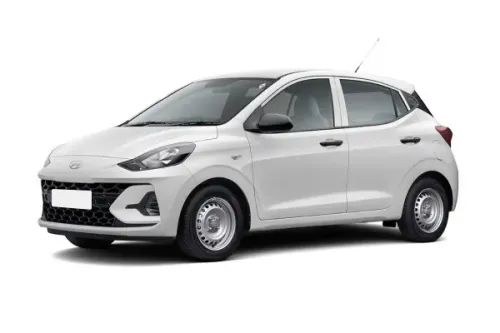
Hyundai i10 Nios Grand i10 Nios Era
Hyundai i10 Nios
Hyundai Exter HX2
Hyundai Exter
Car comparison placeholder
Here is a detailed comparison of price:

Hyundai i10 Nios Grand i10 Nios Era

Price

₹ 5.92 Lakh

On-Road Price New Delhi

EMI

₹ 10,929/month

Hyundai Exter HX2

Price

₹ 6.27 Lakh

On-Road Price New Delhi

EMI

₹ 11,580/month

From the above comparison, we can conclude that Hyundai i10 Nios feels light on the pocket compared to Hyundai Exter by ₹35,281.

Dimensions & Seating

Body Type

Hatchback

Compact Suv

Length

3815 mm

3830 mm +15

Width

1680 mm

1723 mm +43

Height

1520 mm

1643 mm +123

WheelBase

2450 mm

2450 mm

Ground Clearance

165 mm

185 mm +20

Seating Capacity

5

5

Fuel Tank Capacity

37 Liters

37 Liters

Boot Space

260 Liters

391 Liters +131

Engine & Transmission

Fuel Type

Petrol

Petrol

Mileage (KMPL)

18

19 Km/l +1

Range

660 Kms

703 Kms +43

Engine Type

1.2 Kappa

1.2l Kappa Ii

Powertrain Assistance

No

No

Emission Standards

Bs Vi

Bs Vi

No. of Cylinders

4

4

Displacement

1197 cc +198

999 cc

Max Power

82 bhp @ 6000 rpm

82 bhp @ 6000 rpm

Max Torque

114 Nm @ 4000 rpm +0.2

113.8 Nm @ 4000 rpm

Transmission Type

MT

MT

Gear Box

5-Manual

5-MT

Drive Type

FWD

FWD

Top Speed

160

160

Steering and Suspension

Tilt Adjust

--

Yes

Telescopic Adjust

--

--

Turning Radius

4.8

5.1 +0.3

Front Suspension

McPherson Strut

McPherson Strut

Rear Suspension

Coupled Torsion Beam Axle

CTBA with Coil Spring

Front Brakes

Disc

Disc

Rear Brakes

Drum

Drum

Safety & Security

Airbags

6

6

Seatbelt Warning

Yes

Yes

Over Speeding Warning

Yes

Yes

Anti-lock Braking System

Yes

Yes

ESP

--

Yes

Brake Assist

--

--

Tyre Pressure Monitor System

No

Yes

Reverse Camera

No

No

360 Camera

No

No

Hill Assist

--

Yes

Hill Descent Control

No

No

Child Lock

Yes

Yes

Isofix Child Seat Mount

Yes

Yes

Engine Immobilizer

Yes

Yes

ADAS

No

No

Comfort & Convenience

Power Windows

Only Front

Only Front

ORVM Adjustment

Manual

Manual

Request Sensors

--

Yes

Push Button Start

No

No

Cruise Control

No

No

Keyless Entry

--

Yes

Steering Mounted Control

--

--

Climate Control

--

--

Rear AC Vents

No

No

Adjustable Steering Column

--

Yes

Interior Features

Upholstery

Fabric

Fabric

Adjustable Front Seats

Yes

Yes

Height Adjustable Driver Seat

--

Yes

Rear Armrest

No

No

Rear Cup Holders

--

--

Front Cup Holders

Yes

Yes

Cooled Glovebox

No

No

Exterior Features

Sunroof

No

No

Wheels

Steel Rims

Steel Rims

Fog Lights

No

No

Tyre Size

165 / 70 R14

165 / 70 R14

Daytime Running Lights

--

--

Headlight Type

Halogen

Halogen

Tailgate

Manual

Manual

Roof Rails

No

No

Rear Wiper

No

No

Infotainment & Telematics

Touch Screen

--

--

Screen Size

--

--

USB Port

--

--

Navigation System

No

No

Speakers

--

--

Remote App Control

No

No

Wireless Charging

No

No

Smartphone Connectivity

No

No

Telematics

Analogue-Digital

Digital

Connectivity & Internet

USB Port

--

--

Navigation

No

No

Smartphone Connectivity

No

No

Hyundai i10 Nios Vs Hyundai Exter Colors
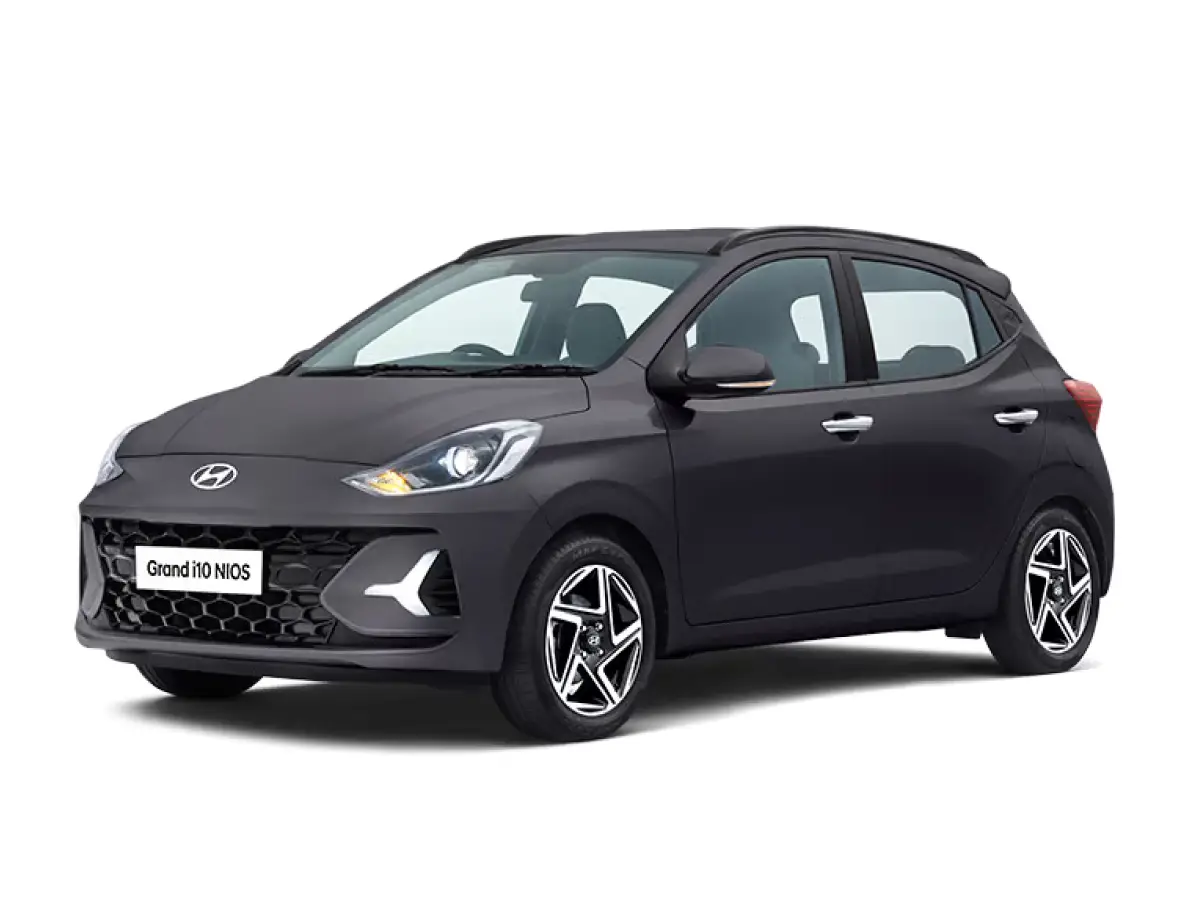
Hyundai i10 Nios Titan Grey

Titan Grey

Side profile of the Hyundai Exter in Titan Grey.

Titan Grey

Hyundai i10 Nios Titan Grey

Titan Grey

Side profile of the Hyundai Exter in Titan Grey.

Titan Grey

Hyundai i10 Nios Vs Hyundai Exter Expert Opinions
Design and Aesthetics
Features and Specifications
After Sales Support
Brand Value
Resale Value
Likes
Dislikes
Design and Aesthetics
Features and Specifications
After Sales Support
Brand Value
Resale Value
Likes
Dislikes
Hyundai i10 Nios Vs Hyundai Exter FAQs

The Hyundai Grand i10 Nios is priced between ₹5.98 lakh and ₹8.65 lakh (ex-showroom). It was launched in January 2023 with updated design, more features, and better safety equipment.

The car comes with a 1.2-litre Kappa MPI petrol engine (1197 cc). Transmission options include manual and AMT. Hyundai also offers a factory-fitted CNG variant for buyers who want low running costs.

The petrol version delivers around 18 kmpl. With petrol at ₹102 per litre, the running cost works out to: 102/18≈₹5.66 per km. The CNG version gives about 28 km/kg. At ₹75 per kg, the running cost is ≈₹2.67 per km.

The Nios measures 3.815 metres in length (12.5 feet), 1.68 metres in width (5.5 feet), and 1.52 metres in height (4.9 feet). Boot space is 260 litres, which is good enough for weekend luggage or daily family use.

The first i10 was around 3.56 metres long, while the Nios stretches to 3.815 metres, nearly 25 cm longer. It’s also wider and taller, which translates into more cabin comfort. Boot capacity has grown from 225 litres to 260 litres, and modern safety kit like 6 airbags, ABS with EBD, and ISOFIX mounts make it far safer. Simply put, the Nios feels like a proper grown-up version of the first i10.

If you want a stylish city hatchback with practical space and low running costs, the Nios makes sense. Petrol gives smooth performance, while CNG saves money on every trip. Compared to older i10 models, the Nios is more spacious, safer, and modern, making it a great fit for both daily commutes and small family runs.

Hyundai cars are known for low service bills, and the Nios is no exception. On average: 1. Petrol Nios yearly maintenance costs around ₹6,000–₹8,000 for regular servicing. 2. CNG Nios costs slightly more, about ₹7,000–₹9,000, since CNG filters and tuning need checks. 3. Consumables like engine oil, brake pads, and tyres add up over time, so after 4–5 years, expect some bigger bills (₹12,000–₹15,000 in those years). Over a 5-year period, the Nios typically costs ₹35,000–₹40,000 to maintain, which is very competitive compared to rivals like Swift or Tiago.

The 2026 facelift introduces a bolder front fascia with a new black radiator grille, redesigned front and rear bumpers, and a sporty wing-type rear spoiler. Inside, it features a new Navy Blue and Grey dual-tone theme, a D-cut steering wheel, and metal pedals.

Hyundai has replaced the old EX, S, SX naming system with a new alphanumeric hierarchy: HX2, HX3, HX4, HX4+, HX6, HX8, and HX10. This aligns the Exter with the latest global branding seen on models like the new Verna and Venue.

The Exter is built on the same K1 platform as the Hyundai Grand i10 Nios and the Hyundai Aura. It shares the same chassis, wheelbase, and 1.2L Kappa engine.

While they share the same mechanical "bones," the Exter is significantly taller (1631mm vs 1520mm) and wider, with a much higher ground clearance of 185mm. It provides the boxy SUV silhouette and rugged styling that the hatchback lacks.

No, the 2026 Exter continues with the reliable 1.2-litre, 4-cylinder naturally aspirated Kappa petrol engine, producing 83 PS and 114 Nm of torque.

Two new premium shades have been added: Golden Bronze and Titanium Black Matte. The previous Abyss Black has been replaced by Titanium Black.

Safety is a major focus; 6 airbags, Electronic Stability Control (ESC), and Hill Start Assist Control (HAC) are now standard from the base HX2 variant.

The petrol variants offer a massive 391 litres of boot space, while the dual-cylinder CNG variants offer 225 litres.

The HX6 variant is widely considered the sweet spot, as it includes the sunroof, dashcam, automatic climate control, and projector headlamps.

HX10 is the new top-of-the-line flagship trim. It exclusively features metal pedals, onboard navigation with OTA updates, and the full suite of leatherette-wrapped interior touchpoints.
*Ad Advertisement banner