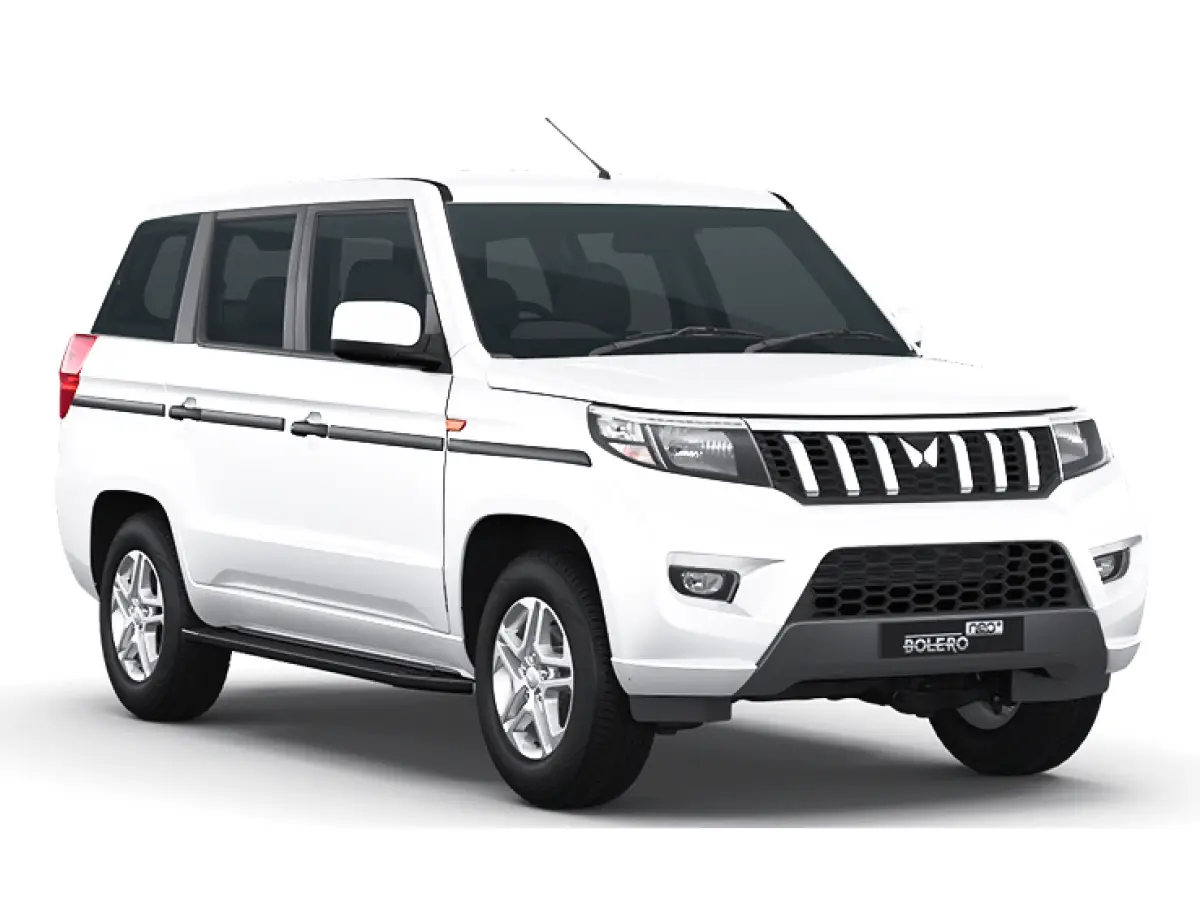





























Let's compare Maruti Eeco 5Str vs Mahindra Bolero Neo Plus p4

Compare Maruti Eeco 5Str vs Mahindra Bolero Neo Plus p4 price, specifications, mileage, features and performance to find the best car for you.

Maruti Eeco 5Str
Maruti Eeco
Mahindra Bolero Neo Plus p4
Mahindra Bolero Neo Plus
Car comparison placeholder
Here is a detailed comparison of price:

Maruti Eeco 5Str

Price

₹ 4.33 Lakh

On-Road Price New Delhi

EMI

₹ 8,001/month

Mahindra Bolero Neo Plus p4

Price

₹ 12.52 Lakh

On-Road Price New Delhi

EMI

₹ 23,110/month

From the above comparison, we can conclude that Maruti Eeco feels light on the pocket compared to Mahindra Bolero Neo Plus by ₹8,18,254.

Dimensions & Seating

Body Type

Mpv

Mpv

Length

3675 mm

4400 mm +725

Width

1475 mm

1795 mm +320

Height

1825 mm +13

1812 mm

WheelBase

2350 mm

2680 mm +330

Ground Clearance

160 mm

180 mm +20

Seating Capacity

5

9 +4

Fuel Tank Capacity

32 Liters

50 Liters +18

Boot Space

540 Liters +156

384 Liters

Engine & Transmission

Fuel Type

Petrol

Diesel

Mileage (KMPL)

19.71 Km/l +2.42

17.29

Range

631 Kms

860 Kms +229

Engine Type

K12n

2.2 Litre Mhawk Diesel

Powertrain Assistance

No

Mild Hybrid

Emission Standards

Bs Vi

Bs Vi

No. of Cylinders

4 +1

3

Displacement

1197 cc

2184 cc +987

Max Power

81 bhp @ 6000 rpm

118 bhp @ 4000 rpm +37

Max Torque

105.5 Nm @ 3000 rpm

280 Nm @ 1800 rpm +174.5

Transmission Type

MT

MT

Gear Box

5MT

5-MT

Drive Type

RWD

RWD

Top Speed

140

150 +10

Steering and Suspension

Tilt Adjust

--

Yes

Telescopic Adjust

--

--

Turning Radius

4.5

5.8 +1.3

Front Suspension

McPherson Struts

Double Wish-Bone with Coil Spring and Stabilizer Bar

Rear Suspension

3-Link Rigid Axle

Multi-Link with Coil Spring and Stabilizer Bar

Front Brakes

Disc

Disc

Rear Brakes

Drum

Drum

Safety & Security

Airbags

6 +4

2

Seatbelt Warning

Yes

Yes

Over Speeding Warning

Yes

Yes

Anti-lock Braking System

Yes

Yes

ESP

--

Yes

Brake Assist

--

--

Tyre Pressure Monitor System

No

No

Reverse Camera

No

No

360 Camera

No

No

Hill Assist

--

--

Hill Descent Control

No

No

Child Lock

Yes

Yes

Isofix Child Seat Mount

--

Yes

Engine Immobilizer

Yes

Yes

ADAS

No

No

Comfort & Convenience

Power Windows

--

Front And Rear

ORVM Adjustment

--

Manual

Request Sensors

--

--

Push Button Start

No

No

Cruise Control

No

No

Keyless Entry

--

--

Steering Mounted Control

--

--

Climate Control

--

--

Rear AC Vents

No

No

Adjustable Steering Column

--

Yes

Interior Features

Upholstery

Fabric

Fabric

Adjustable Front Seats

Yes

Yes

Height Adjustable Driver Seat

--

--

Rear Armrest

No

No

Rear Cup Holders

--

--

Front Cup Holders

--

Yes

Cooled Glovebox

No

No

Exterior Features

Sunroof

No

No

Wheels

Steel Rims

Steel Rims

Fog Lights

No

No

Tyre Size

155 / 65 R13

215 / 70 R16

Daytime Running Lights

--

--

Headlight Type

Halogen

Halogen

Tailgate

Manual

Manual

Roof Rails

No

No

Rear Wiper

No

No

Infotainment & Telematics

Touch Screen

--

--

Screen Size

--

--

USB Port

Yes

Yes

Navigation System

No

No

Speakers

--

--

Remote App Control

No

No

Wireless Charging

No

No

Smartphone Connectivity

No

No

Telematics

Digital

Digital

Connectivity & Internet

USB Port

Yes

Yes

Navigation

No

No

Smartphone Connectivity

No

No

Maruti Eeco Vs Mahindra Bolero Neo Plus Colors
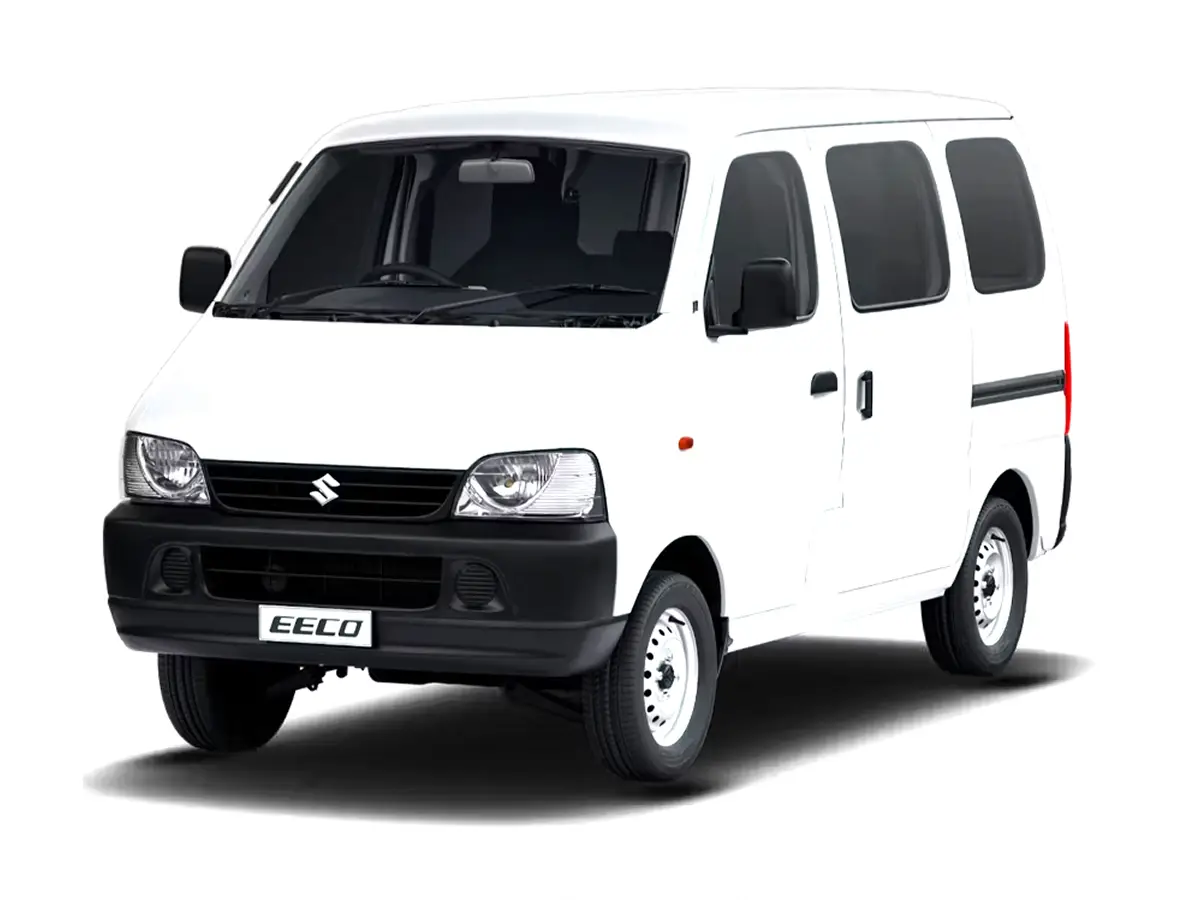
Maruti Eeco Solid White

Solid White

Mahindra Bolero Neo Plus DIAMOND WHITE

DIAMOND WHITE

Maruti Eeco Solid White

Solid White

Mahindra Bolero Neo Plus DIAMOND WHITE

DIAMOND WHITE

Maruti Eeco Vs Mahindra Bolero Neo Plus Expert Opinions
Design and Aesthetics
Features and Specifications
After Sales Support
Brand Value
Resale Value
Likes
Dislikes
Design and Aesthetics
Features and Specifications
After Sales Support
Brand Value
Resale Value
Likes
Dislikes
Maruti Eeco Vs Mahindra Bolero Neo Plus FAQs

The base 5-seater STD petrol version of Eeco starts at around ₹5.44 lakh (ex-showroom, Delhi), and the higher 5-seater AC CNG variant goes up to about ₹6.96 lakh (ex-showroom, Delhi).

Eeco uses a 1.2-litre DualJet petrol engine (≈ 1,196 cc) producing about 80 bhp and 104 Nm torque. With petrol, it delivers roughly 19.71 kmpl; the CNG version gives around 26.78 km/kg.

Eeco got a big update in 2025: 6 airbags as standard, improved safety fitments including ABS with EBD, seat-belt warnings, child lock, engine immobilizer, reverse parking sensors, etc. Before this update, many variants had only 2 airbags (driver & passenger) or less safety gear.

If you want a practical van/MPV that can carry people or goods affordably, the Eeco is perfect. It appeals to small business owners, families needing extra space, or people wanting van-utility without paying SUV premiums. If you don’t care about fancy upholstery or sporty ride, but want reliability, low running costs, and lots of space, Eeco is a no-brainer.

Compared to hatchbacks, Eeco gives way more cabin and loading space, higher seating, easier to load/unload goods or luggage. Compared to small MPVs, it’s simpler, more rugged, and cheaper to maintain. Where hatchbacks win in comfort or fuel efficiency, Eeco wins in practicality and space.

Eeco is about 3,675 mm long, 1,475 mm wide, and 1,825 mm tall, wheelbase ~ 2,350 mm. Ground clearance is ~ 160 mm. Those tall dimensions and high roof make it easier to stand inside, load luggage or goods, and the ground clearance helps with speed breakers and rough roads. But its width is modest, so in narrow streets it is manageable.

There are variants with 5 seats, or a new 6-seater variant introduced with forward-facing middle row (captain style). Earlier there were also 7-seater options, but many of those have been discontinued in favor of 5/6 seat‐layouts that are safer and more comfortable.

With petrol mileage ~ 19.71 kmpl and petrol price ~ ₹102/L, the fuel cost comes to about ₹5.17/km. If you drive 12,000 km/year, fuel costs ~ ₹62,000/year. With the CNG version (~26.78 km/kg and CNG price lower than petrol), cost is significantly less per km, maybe ~ ₹3.8-₹4/km depending on local CNG rates. Maintenance for Eeco is low because parts are simple, service widely available, no complex electronics, so yearly upkeep is modest.

Despite being basic, Eeco has useful comfort features: Manual AC in AC-variants, sliding side doors, spacious legroom, adjustable front seats, reverse parking sensors, semi-digital odometer, dual front airbags now standard, basic audio support via AUX/USB. The new 6-seater version gets captain-seats in middle row, which adds comfort for passengers.

The Bolero Neo Plus is priced at about ₹ 11.39 lakh for the base P4 variant and ₹ 12.49 lakh for the higher P10 trim (ex-showroom, India).

This is a 9-seater SUV with a seating layout of 2 + 3 + 4 rows (side-facing bench in the last row). Basically, enough space for your big joint family or shifting team of office staff.

Under the hood there is a 2.2-litre mHawk diesel engine, producing about 118 bhp and 280 Nm torque between ~1800-2800 rpm. It uses a 6-speed manual gearbox. This engine is chosen because it provides decent pulling power and torque low down, which helps when the car is full, going up inclines or carrying heavy loads—typical in semi-urban or rural use. Also, Mahindra has a history with mHawk diesels, so parts and service come easier.

Length ≈ 4,400 mm (≈ 14.44 ft), width ≈ 1,795 mm (≈ 5.89 ft), height ≈ 1,812 mm (≈ 5.94 ft). Wheelbase sits around 2,680 mm. Fuel tank capacity is 60 litres. These dimensions mean the Bolero Neo Plus is much larger than its sub-4m siblings. The size gives you more cabin space (particularly for 3 rows), more load carrying, better presence in traffic, but also means that parking in very tight spots or narrow lanes will feel bulkier. Fuel consumption and steering effort may also be more than smaller SUVs.

Mahindra claims about 14.00 km/l for the Bolero Neo Plus under ARAI test cycle. In real-life, with full load, city driving, hills etc., expect something lower—maybe 11-12 km/l or less. Just saying, because full-family trips don’t feel “light” for these engines.

There are two trims: P4 (base) and P10 (top). Basic features in base include the standard essentials: seat belts all rows, dual airbags, ABS + EBD, engine immobilizer, ISOFIX child seat anchors. The P10 adds some comforts and style goodies though not ultra luxury: perhaps better infotainment, slightly improved interiors. (It doesn’t try to be Mercedes, but tries to be Bolero with modern salt & pepper.)

Neo Plus is basically the big brother. It resurrects the 3-row layout of the older TUV300+ (which was discontinued before BS6), but with Bolero’s design cues. More space, longer dimensions, heavier frame, more seats. Regular Bolero Neo is more sub-compact, fewer seats, more city-friendly. If you are something who wants your car to carry more people regularly, Neo Plus is the choice; if mostly city solo or with 2-3 people, regular might be enough and more manageable.

People who need space more than flash. Think small business owners, large families, rural & semi-urban transport, small school fleets, or institutions (police, ward administration) that need affordable, rugged, 9-seaters. If your route has bad roads, regular full loads, maybe narrow lanes in small towns but you compromise a bit on parking, this is made for you. If you mostly drive solo in smooth high-rises, it’ll feel a bit bulky.
*Ad Advertisement banner