






















Electric Cars Reach 7%+ Market Share: EVs are no longer a niche!
By Eram Warsi • Published on 20 Sept 2026For years, electric cars in India felt like a niche choice, bought by early adopters who were willing to think about charging, range and battery life ...
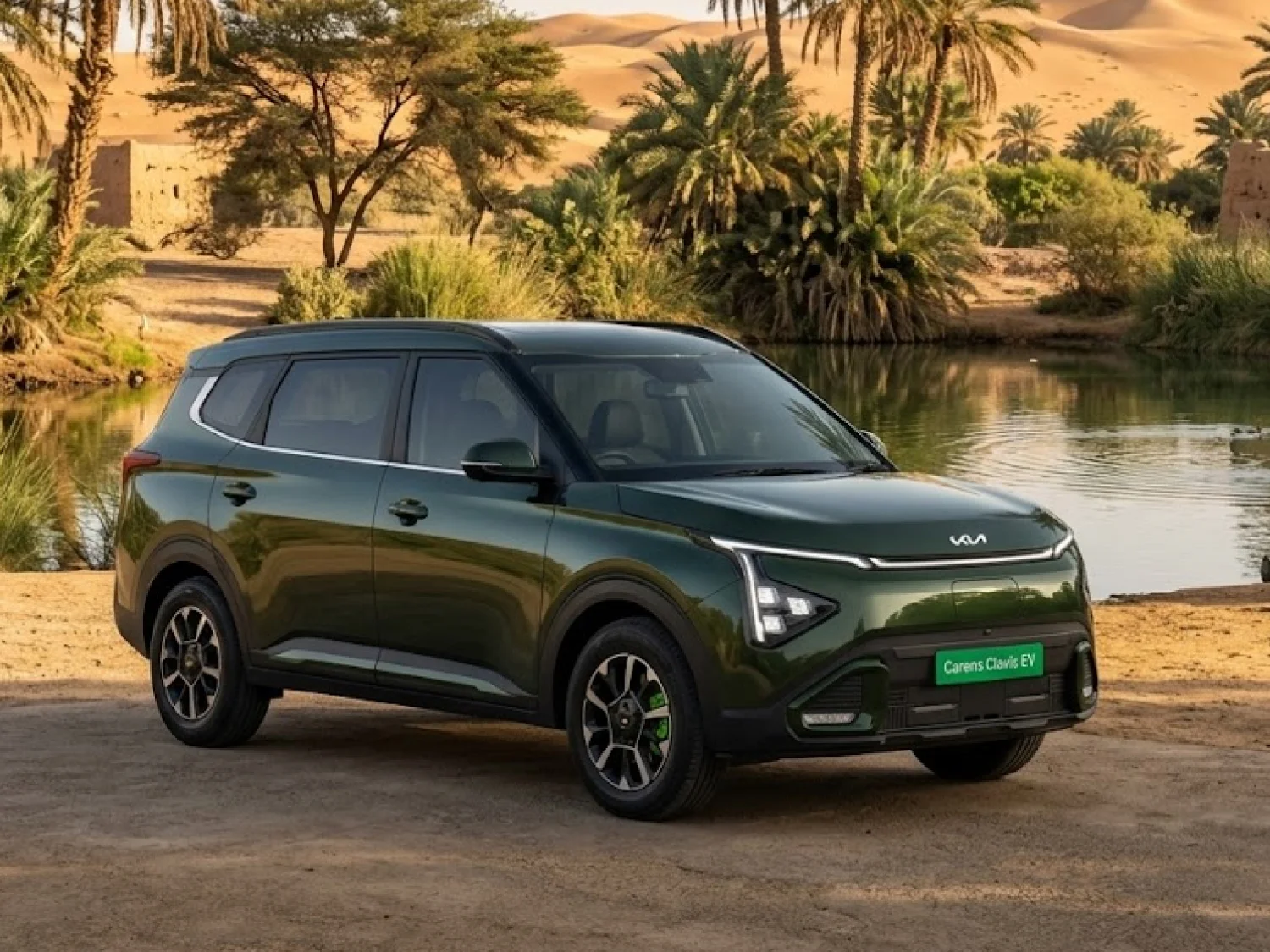
For years, electric cars in India felt like a niche choice, bought by early adopters who were willing to think about charging, range and battery life a little more than the average car buyer. That is changing. Electric cars now account for around 7% to 8% of India's passenger vehicle market, up from roughly 5% a year ago, with August 2026 at about 7.4% to 7.6% depending on the registration dataset.
That number may look small, but it is large enough to change the question from "Will Indians buy EVs?" to "Are EVs becoming a normal car choice?"
Electric Cars Cross 7% Market Share
August 2026 saw around 30,000 electric passenger vehicles registered in India. Vahan data compiled by Nuvama puts EV penetration at 7.4%, while FADA's retail data puts it at 7.6%. Both datasets point in the same direction: EVs are now firmly in the mid-single-digit to high-single-digit range.
The year-on-year growth is even more telling.
|
Period |
EV passenger vehicle share |
YoY growth |
|---|---|---|
|
June 2025 |
4.8% |
Base |
|
June 2026 |
7.7% |
EV sales +107.8% |
|
August 2025 |
5.8% |
Base |
|
August 2026 |
7.4% to 7.6% |
EV registrations +50%+ |
June 2026 was particularly strong, with 31,823 electric passenger vehicles sold, more than double the 15,318 units recorded in June 2025. EV penetration reached 7.7% that month.
August was slightly lower than June and July, but the bigger picture remained strong. During the first five months of FY2026-27, electric passenger vehicle registrations were up 85% year on year, reaching 153,403 units compared with 83,007 units in the same period a year earlier.
Tata and Mahindra Still Control the Volume
The EV market is growing, but the volume is not evenly spread across manufacturers.
Tata Motors remains the largest electric carmaker in India, while Mahindra has rapidly strengthened its position with models such as the XUV 3XO EV and BE range.
In August 2026:
Tata Motors: 12,983 EVs, 42.8% market share
Mahindra: 6,367 EVs, 21% market share
JSW MG Motor: 4,568 EVs, 15.1%
VinFast: 2,196 EVs, 7.2%
Maruti Suzuki: 1,391 EVs, 4.6%
Tata and Mahindra together accounted for roughly 64% of India's electric passenger vehicle registrations in August.
The gap between them has also changed quickly. In the first half of 2026, Tata held 39% of the EV market while Mahindra had 23%. Mahindra's EV sales jumped 147% year on year during the period.
So, Are EVs Now Normal?
Not completely. But they are getting close to becoming a mainstream choice.
There is an important difference between saying EVs are mainstream and saying EVs are no longer niche.
At 7% to 8% market share, an EV buyer is no longer buying a product that almost nobody else around them owns. There are more models, more price points, more charging stations and more people who have already lived with an electric car.
That changes the buyer's mindset.
Five years ago, the first questions were:
"Will the battery last?"
"Where will I charge it?"
"What if I get stuck?"
Today, many buyers are asking more familiar car-buying questions:
"How much does it cost?"
"How much range do I get?"
"Is it better than the petrol version?"
"Which EV should I buy?"
That is a major shift.
More EV Models Are Helping
The growth is also happening because consumers finally have more choice.
Tata has built a wide EV portfolio, while Mahindra has expanded aggressively. MG continues to have a significant presence, and new entrants such as Maruti Suzuki and VinFast are adding more competition.
In the first half of 2026, Tata, Mahindra and MG remained the three largest EV manufacturers, but Maruti and VinFast together added more than 12,000 units to the market.
More models matter because EV adoption cannot grow rapidly if buyers have only one or two products to choose from.
A family looking for a compact SUV needs a different EV from a buyer looking for a city hatchback. Someone doing 1,500 km a month has different requirements from someone driving 500 km.
The market is slowly reaching that stage.
The Real Test Is Not Sales, It Is Ownership
A 7% EV market share does not mean that petrol and diesel cars are suddenly in trouble.
India still sells far more internal-combustion cars than electric cars.
The bigger change is that EV ownership is becoming easier to understand.
Home charging can make daily running costs significantly lower than petrol. Public charging networks are expanding. EV service knowledge is improving. Used EVs are entering the market. Manufacturers are offering longer battery warranties.
And, importantly, consumers now have more people to ask about their actual ownership experience.
That is how new technology becomes normal.
What Happens at 10%?
The next psychological milestone may be 10% passenger EV penetration.
There is nothing magical about 10%. But once roughly one in every ten new cars is electric, EVs become much harder to describe as a niche product.
You will see them more often on roads. More apartment societies will need charging solutions. More offices will install chargers. More workshops will learn EV repair. More banks and financiers will understand EV resale values.
The infrastructure starts responding to demand, and demand starts responding to infrastructure.
That creates a feedback loop.
India's EV Story Has Changed
The most important EV number today may not be the total number of electric cars sold.
It is the share of new cars being electric.
Moving from roughly 5% to more than 7% in a year means EVs are taking a larger slice of the new-car market. August 2026's 7.4% to 7.6% share is still far from petrol's dominance, but it is a very different market from the one India had a year or two ago.
So, is 2026 the year EVs became normal in India?
Maybe not the year they became the default.
But it may be the year they stopped feeling unusual.
/Xuv 3xo RevX-1.webp)
 1.webp)